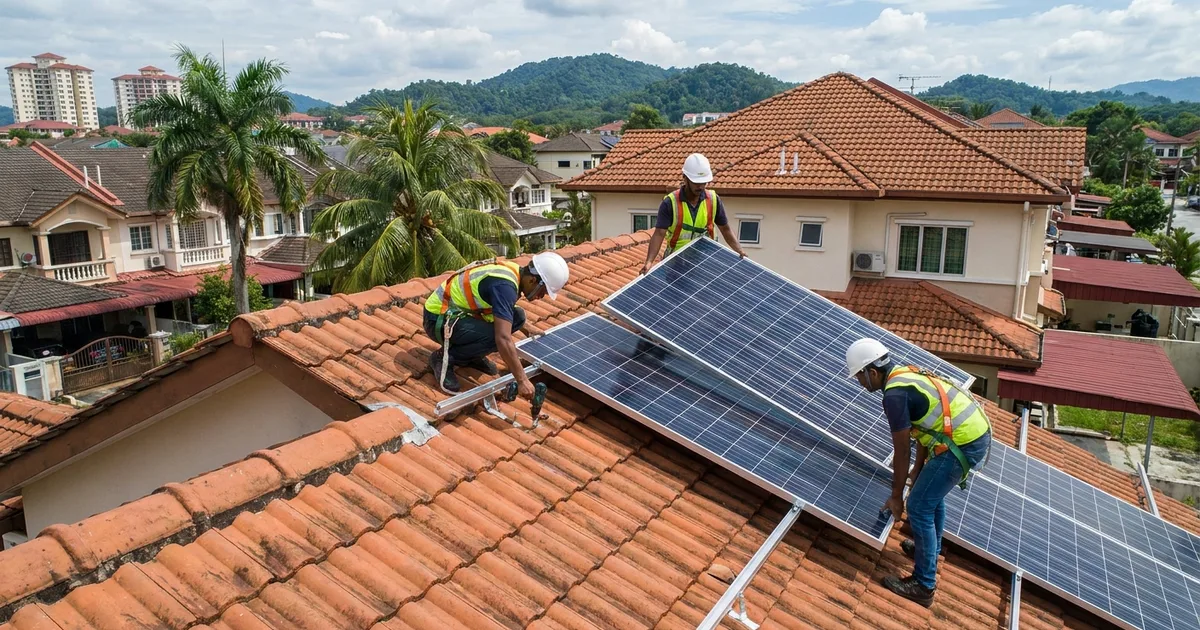
Search “top solar companies in Malaysia” and the first result is written by Trexon Energy, who placed themselves at number one. The second result is a referral site that earns a cut of every lead it sends. You went looking for an unbiased list and found lists written by the people who want to sell you the system.
This one is different. SolarCompare.my is a comparison platform, not an installer. We have no financial relationship with any company ranked below and no reason to favour one over another. We earn by connecting homeowners with verified installers, not by pushing a specific name, so the order here reflects who each company is genuinely best for, not who paid to sit at the top.
The top 10 solar companies in Malaysia in 2026 are: Solarvest Holdings, GSPARX (a TNB subsidiary), Plus Solar Systems, Pekat Solar, Samaiden Group, Verdant Solar, SOLS Energy, Cypark Resources, Progressture Solar, and Trexon Energy. All are SEDA-registered. The right choice depends on your system size, property type, and whether you need residential or commercial expertise. Once you have a shortlist, the fastest way to test it is to compare quotes from verified installers side by side.
How We Chose These 10 Solar Companies (and the One Filter That Matters Most)
One filter sits above all the others: SEDA registration. SEDA, the Sustainable Energy Development Authority, maintains the Registered PV Service Provider (RPVSP) directory, and it is the legal gateway to a grid-connected system. A company not on that directory cannot lawfully connect your panels to TNB’s grid or process a Solar ATAP application on your behalf. There is no exception to this, which is why it is the first thing we checked for every name below.
Malaysia crossed 5.7 GW of installed solar capacity by the end of 2025, adding more than 1.4 GW in that year alone according to pv-magazine, and that boom has pulled in installers of wildly varying quality. There are more than 800 SEDA-registered providers nationally. Registration is the floor, not the ceiling. From that pool we ranked on track record (installed MWp or project count), residential versus commercial focus, transparency (published pricing or named project references), and market reputation, and we excluded any company we could not independently verify against SEDA’s directory.
One point on neutrality, because it is the whole reason this page exists: we have no referral relationship with any company below, so our only incentive is to match you with an installer that fits your roof and budget. Here is how all 10 stack up at a glance, with full profiles underneath.
Top 10 Solar Companies in Malaysia: At a Glance
If you already know your situation, a mid-sized terrace home wanting financing, say, or a factory roof needing a turnkey contractor, this table points you to the two or three names worth contacting first. Every row is SEDA-registered. The difference is in focus and credential.
| Company | Best For | SEDA | Focus | Notable Credential |
|---|---|---|---|---|
| Solarvest Holdings | Large C&I / utility-scale | Yes | Utility + C&I | 1,200+ MW across 7 APAC countries |
| GSPARX (TNB) | Homeowners wanting streamlined grid connection | Yes | Residential + C&I | TNB subsidiary; 340 MWp installed |
| Plus Solar Systems | Budget-conscious Klang Valley homeowners | Yes | Residential | High-volume buying lowers component cost |
| Pekat Solar | Fast ROI / high-efficiency builds | Yes | Residential + C&I | Listed; 20+ yrs electrical engineering |
| Samaiden Group | Full-turnkey C&I / EPCC projects | Yes | C&I + Utility | SEDA, CIDB, Energy Commission, ISO accredited |
| Verdant Solar | Mid-market residential with strong aftersales | Yes | Residential | Malaysia Book of Records 2022 + 2023 |
| SOLS Energy | Residential and community solar | Yes | Residential | 2,600+ completed projects |
| Cypark Resources | Commercial rooftop + utility farms | Yes | C&I + Utility | Listed; utility-scale specialist |
| Progressture Solar | Buyers who want pricing transparency upfront | Yes | Residential + C&I | Publishes install price guide online |
| Trexon Energy | Mid-budget homeowners wanting a known price | Yes | Residential | Publishes from RM 14,999 pricing publicly |
Top 10 Solar Companies in Malaysia: Full Company Profiles
Each profile follows the same structure on purpose. Same depth, same honesty, including a line on who should look elsewhere. A list that only praises is a list you cannot trust.
1. Solarvest Holdings Berhad
Best for: large commercial buyers or homeowners who want the most established name.
Listed on Bursa Malaysia, Solarvest carries 1,200+ MW of installed capacity across seven APAC countries and positions itself as Malaysia’s number one solar company. Its core strength is utility-scale and large commercial work. Consider elsewhere if you are a single residential homeowner, since residential is a secondary focus here and a smaller specialist will give your project more attention.
2. GSPARX
Best for: homeowners who want the smoothest possible grid connection.
GSPARX belongs to Tenaga Nasional Berhad as a wholly-owned subsidiary, with 340 MWp installed across 2,310 residential homes and 550 commercial and industrial buildings. The TNB ownership is the real draw, since it tends to streamline meter processing and cut bureaucratic delays. Consider elsewhere if you want the keenest price, since that backing can come with premium pricing against independent installers.
3. Plus Solar Systems
Best for: budget-conscious homeowners in the Klang Valley.
Plus Solar is a high-volume residential installer focused on the Klang Valley and Selangor. Its volume purchasing lowers component costs, and those savings get passed to buyers. Consider elsewhere if you live outside KL or Selangor, where coverage may be limited.
4. Pekat Solar (Pekat Group Berhad)
Best for: buyers chasing fast ROI from a high-efficiency build.
More than 20 years in electrical engineering sit behind Pekat’s solar arm, and the Bursa-listed group has turned that into a reputation for high-yield system design and strong technical execution. Consider elsewhere if you want the lowest possible upfront cost, since the high-efficiency positioning usually means pricier components.
5. Samaiden Group Berhad
Best for: commercial and industrial clients who want a full turnkey contractor.
Samaiden is a listed EPCC specialist accredited by SEDA, CIDB, the Energy Commission, and ISO. It handles engineering, procurement, construction, and all approvals in-house. Consider elsewhere if you are a residential homeowner, because Samaiden is built primarily for commercial and utility-scale work.
6. Verdant Solar
Best for: mid-market homeowners who value service and aftersales.
Verdant holds Malaysia Book of Records entries for 2022 and 2023 and has built a strong residential brand around customer service. It is a reliable pick for a standard landed home. Consider elsewhere if you are a commercial buyer with a large project, since Verdant’s strength sits in mid-market residential.
7. SOLS Energy
Best for: residential and community solar buyers.
SOLS Energy has completed 2,600+ projects with a residential and community focus and a community-driven sales model. The volume of finished work is its main credential. Consider elsewhere if you specifically want a listed company with audited financials, as SOLS is not publicly listed.
8. Cypark Resources Berhad
Best for: commercial rooftop and utility-scale solar farms.
Utility-scale solar farms are the core business here, with commercial rooftop work alongside it. Bursa-listed and built for size, Cypark is a serious name when the project is large. Consider elsewhere if you are a residential homeowner, because a single roof is not where this company’s strength sits.
9. Progressture Solar
Best for: buyers who want pricing visible before the first call.
Few installers in Malaysia publish an install price guide online; Progressture does, and pairs it with active content and a residential plus commercial offering. That upfront transparency is the whole selling point. Consider elsewhere if you want the largest installed portfolio, since Progressture sits mid-tier by volume against the listed players.
10. Trexon Energy
Best for: mid-budget homeowners who want a known price upfront.
Trexon is a growing mid-tier installer, SEDA-licensed and Solar ATAP approved, that publishes pricing from RM 14,999 publicly. That openness makes it easy to benchmark. Consider elsewhere if you are a large commercial buyer, because Trexon is primarily residential and small commercial.
Who just missed the cut. A few names show up repeatedly in other rankings and are worth a look depending on your project: Plus Xnergy (large-scale and commercial PPA specialist), Pathgreen Energy (multi-state residential), Northern Solar (Penang and the northern region), ITRAMAS, and Next Energy (commercial and utility). None are weak companies. They sit just outside the top 10 on the residential track record and transparency criteria we ranked on, and all should still clear the same SEDA check before you sign.
How to Verify a Solar Company’s Credentials Before You Sign Anything
A name on a top-10 list is a starting point, not a guarantee. Three checks confirm any installer is legitimate, and they cost you nothing but a few minutes.
Check the SEDA RPVSP directory first. Go to seda.gov.my, open the Registered PV Service Provider Directory, and search by company name or state. This is the same registry that confirms a SEDA registered solar company in Malaysia can legally do the work. If a company is not listed, it cannot connect your system to the grid or file your Solar ATAP application, full stop.
Confirm the workmanship warranty in writing. The minimum you should accept is five years. Tier 1 installers offer ten. Get the figure on paper before you sign, not as a verbal promise during the sales visit.
Check CIDB registration for larger jobs. Projects above RM 200,000 require CIDB registration, which you can verify at cidb.gov.my. Most residential installs fall below this threshold, but commercial projects usually need it.
Walk away from any installer showing these red flags: no published pricing, no named project references, unwilling to give a SEDA registration number upfront, or pressuring you to pay in full before installation.
What Does Solar Cost in Malaysia in 2026?
Residential pricing has held steady through 2026 at RM 3,000 to RM 4,000 per kWp all-in, covering panels, inverter, mounting, installation, and the Solar ATAP application. The number that should drive your system size is your monthly TNB bill, not your roof area. Size to the bill and you avoid paying for capacity you will never use.
| System size | Typical home | Monthly TNB bill it targets | Typical all-in cost (RM) |
|---|---|---|---|
| 3 kWp | Small or older terrace | RM 100–150/month | RM 12,000–15,000 |
| 5 kWp | Medium terrace | RM 200–300/month | RM 19,500–25,000 |
| 9 kWp | Semi-D or bungalow | RM 400–600/month | RM 28,000–36,000 |
| 12+ kWp | Large or high-consumption home | RM 600+/month | RM 40,000–60,000+ |
Two add-ons sit outside the per-kWp figure. A LiFePO4 battery runs RM 8,000 to RM 20,000 or more depending on capacity, and annual maintenance is modest at RM 500 to RM 1,000 a year.
There is also a timing wrinkle worth knowing in 2026. China removed its VAT export rebate on photovoltaic modules on 1 April 2026, and module spot prices are expected to drift up from roughly USD 0.12 to USD 0.13 per watt. If you are close to deciding, signing in the first half of 2026 may lock in today’s lower component pricing before it moves.
Solar ATAP Replaced NEM 3.0: What That Means for You
If you read a solar guide written before mid-2025, it probably tells you to apply for NEM 3.0 before the quota runs out. That advice is now out of date. NEM 3.0 ran from 2021 to 2025 on a 2,500 MW total quota, and the residential NEM Rakyat component was 99.8% subscribed by May 2025. It closed to new applications in mid-2025.
Solar ATAP launched on 1 January 2026 with no quota cap, which means the old “apply before it fills up” urgency is gone. The scheme is open, and it will stay open. What this changes for your installer choice is simple: confirm your chosen company is Solar ATAP approved and has actually processed Solar ATAP applications since January 2026, not just NEM 3.0 ones. Ask how many they have completed this year. For the full picture, read our Solar ATAP vs NEM Rakyat guide, and check the current export rate on the official SEDA portal before you commit, since rates may have been confirmed after this was written.
Frequently Asked Questions
Which solar company is best in Malaysia?
There is no single best solar company in Malaysia, because the right pick depends on your property and system size. For large commercial or utility-scale work, Solarvest and Samaiden lead. For the smoothest residential grid connection, GSPARX has the edge as a TNB subsidiary. Budget-focused Klang Valley homeowners often land on Plus Solar, while buyers who want a price before the first call gravitate to Progressture or Trexon. All are SEDA-registered, which is the floor any genuine contender has to clear.
How do I check if a solar company is SEDA registered?
Visit seda.gov.my, open the Registered PV Service Provider (RPVSP) Directory, and search by company name or state. If the company does not appear, it cannot legally connect your system to TNB’s grid or file your Solar ATAP application, so the registration is non-negotiable rather than a nice-to-have.
How much does solar installation cost in Malaysia in 2026?
Residential systems run RM 3,000 to RM 4,000 per kWp all-in. In practice, a 5 kWp system for a medium terrace costs around RM 19,500 to RM 25,000, and a 9 kWp system for a semi-D or bungalow runs RM 28,000 to RM 36,000. Size the system to your monthly TNB bill rather than your roof area, and budget separately for a battery if you want one.
What is Solar ATAP and how does it differ from NEM 3.0?
Solar ATAP is the residential rooftop scheme that replaced NEM 3.0 on 1 January 2026. The headline difference is quota. NEM 3.0 ran on a capped 2,500 MW allocation that effectively filled up, with the residential NEM Rakyat portion 99.8% subscribed by May 2025, whereas Solar ATAP has no quota cap. The practical result is that the old rush-to-apply pressure is gone, so you can take the time to vet installers properly.
A shortlist is only half the job. A single name on a list cannot tell you whether its price is fair, only that the company exists. The way you find that out is to put three quotes side by side. SolarCompare.my matches you with up to three SEDA-registered installers that fit your property and system size, lays their quotes out next to each other, and asks nothing in return. That is the difference between hoping you got a fair price and knowing it.